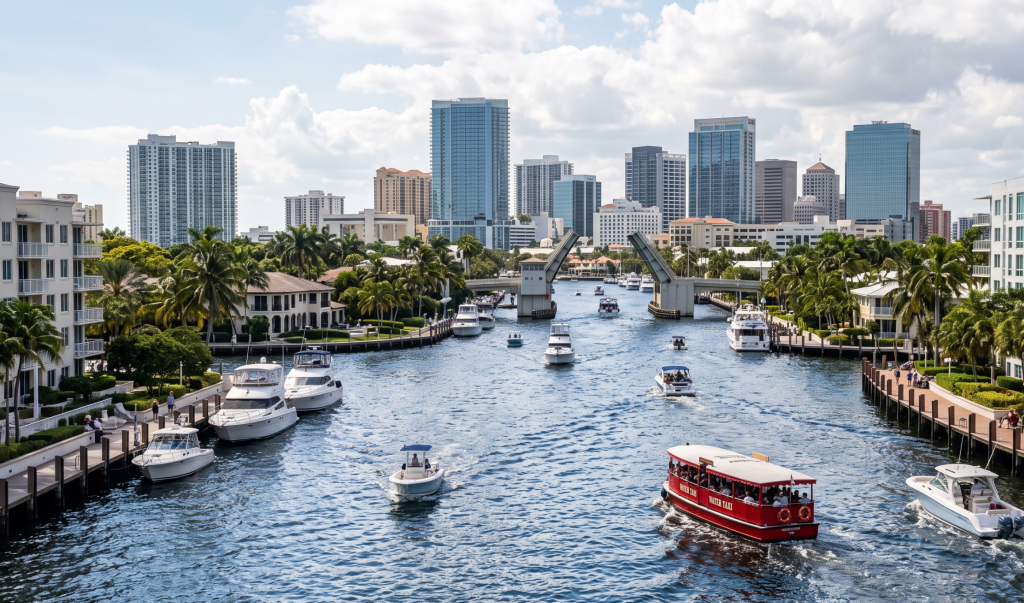
Fort Lauderdale sits just 30 miles north of Miami, yet most travelers still show up expecting Spring Break chaos and generic beach bars. The reality is far more interesting. The city has spent the last decade reinventing itself into something that appeals to a much broader crowd, from couples seeking historic charm to groups looking for the kind of what is fort lauderdale known for experience that actually justifies a trip.
Key Takeaways
- Fort Lauderdale’s identity now centers on its working yachting culture, not just luxury tourism
- The city’s historic neighborhoods (Victoria Park, Riverfront) offer dining, art, and character that rival South Beach
- Las Olas Boulevard serves as the cultural spine connecting beaches, dining, and shopping in one walkable stretch
- Groups traveling to Fort Lauderdale benefit from staying in spacious shared accommodations rather than scattered hotel rooms
Why It Matters
Fort Lauderdale spent decades as Miami’s forgettable sibling, a place people flew through to reach somewhere “better.” That narrative has shifted dramatically. The city actually has a coherent identity now, rooted in its 140-year history as a maritime port and yacht hub. That authenticity matters when you’re planning a trip, especially if you’re traveling with a group and need a destination that gives you enough variety to keep everyone happy across three to five days.
The other reason this matters: how you house your group fundamentally changes what you can actually experience. Scattered hotel rooms kill group cohesion. Sharing a single well-designed apartment, with actual kitchen and common space, transforms Fort Lauderdale from a beach-and-back-to-your-room destination into something you can actually explore together.
The Yachting Capital That No One Talks About
Fort Lauderdale calls itself “the Venice of America,” and that’s not marketing hyperbole. The city sits on the Intracoastal Waterway, a 3,000-mile protected passage where yachtspeople dock their boats for months at a time. The yacht industry here is real: shipyards, brokers, maintenance facilities, and thousands of working vessels. This isn’t Monte Carlo theater. It’s a functioning maritime economy.
Walk along the Las Olas waterfront on any afternoon and you’ll see why travelers who actually understand the city come back. The boat parade happens right in front of you. The restaurants and bars along the Intracoastal have honest views of real watercraft, not staged backdrops. Locals mingle with visitors in a way that feels natural instead of choreographed.
For groups specifically, this matters because it creates authentic gathering spaces. A rooftop bar overlooking dozens of moored yachts beats a generic beach club every time. You get to observe how the city actually works instead of just consuming its tourist infrastructure.
Las Olas Boulevard: The City’s Actual Center
Fort Lauderdale’s mistake, historically, was letting its downtown and waterfront neighborhoods feel separate from the beach. Las Olas Boulevard solved that by creating a continuous spine of restaurants, galleries, shops, and cultural venues that connects beach culture to urban life.
The boulevard stretches from the beach westward for about a mile, packed with venues that actually reflect what Floridians eat and do when tourists aren’t watching. You’ll find James Beard nominated restaurants, serious galleries, and coffee shops that aren’t Instagram props. The street has the energy of a genuine neighborhood mixed-use corridor, not a themed shopping district.
Groups benefit from this concentration because you can literally walk from morning coffee to afternoon browsing to sunset dinner without coordinating transportation. Everyone stays roughly together while still having space to pursue different interests.
Historic Neighborhoods That Feel Like Real Places
Victoria Park and the Tarpon River neighborhoods sit just west of downtown and feel almost nothing like the beach areas. These blocks have older architecture, smaller-scale development, independent shops, and the kind of character that Fort Lauderdale’s earlier generations actually built. Art galleries, vintage furniture stores, casual restaurants, and bars that serve locals as well as visitors.
Neighborhoods like this matter for groups because they give you real variety without requiring constant transportation decisions. You can spend your morning on the beach, your afternoon in Victoria Park galleries, your evening along the waterfront, and actually feel like you’ve experienced a complete city rather than just consumed attractions.
The Beach, But Make It Less Obvious
Yes, Fort Lauderdale has beaches. But here’s what separates the travelers who actually enjoy the city from those who just endure it: the best beach experiences happen before 11am or after 5pm. The daytime sprawl of chairs, umbrellas, and shoulder-to-shoulder bodies is something to survive, not experience.
Instead, sunrise walks along the sand hit completely different. The early mornings are quiet, uncrowded, and genuinely restorative. The evening beach bars become social venues where locals and tourists actually mix. Even the beach serves a function beyond just lying around.
Food Culture That Reflects South Florida
Fort Lauderdale’s restaurant scene borrows heavily from Miami’s multicultural energy but maintains its own identity. You get serious Latin cuisine, Caribbean influences, fresh seafood that actually comes from working boats, and increasingly sophisticated spots that draw ambitious chefs tired of Miami’s overflow.
This matters more than it seems. A great meal becomes a shared memory that bonds a group. Fort Lauderdale’s food scene has enough depth that groups of varying food preferences can actually find their own paths without splitting up constantly.
A Concrete Example: The Weekend Group Trip
Consider this scenario: four friends, mid-career, from different cities, meeting in Fort Lauderdale for four days. One wants to actually relax on sand. One wants galleries and culture. One wants good restaurants. One just wants to not feel stressed coordinating logistics.
With scattered hotel rooms, these preferences become friction. Someone’s always driving to meet someone else. Someone’s always compromising on where to sleep or gather.
With a single, well-designed shared apartment near Las Olas (spacious enough that everyone has private sleeping space but organized around a shared kitchen and living area), the trip transforms. You all start the day together at a coffee spot. You disperse to different activities. You reconvene at a restaurant you’ve actually pre-planned from your shared kitchen space. You have a rooftop or patio where you can decompress together without paying bar prices for hours.
Fort Lauderdale’s actual attractions become more accessible and more enjoyable because your group has a genuine base instead of four separate hotel room islands.
Actionable Takeaways
Conclusion
Fort Lauderdale is known for beaches and yacht culture, yes, but increasingly it’s known for being a place where urban neighborhoods, authentic food culture, and maritime history coexist in a way that works for real group travel. It’s not Miami. It’s not a theme park. It’s a functioning city that happens to be on water, and that’s precisely what makes it worth the trip. The key is understanding what you’re actually looking for and planning accordingly, starting with where your group sleeps.
FAQ
Is Fort Lauderdale worth visiting if I’ve already been to Miami?
Yes, absolutely. Fort Lauderdale has a completely different identity and vibe. While Miami centers on nightlife and high-energy tourism, Fort Lauderdale emphasizes maritime culture, neighborhood-based dining, and authenticity. Many travelers find they actually prefer Fort Lauderdale’s pace and authenticity once they experience it.
When is the best time to visit Fort Lauderdale?
November through April offers ideal weather, avoiding both summer heat and hurricane season. That said, the city’s marina culture means decent conditions year-round. Winter is busiest and priciest, while spring and fall offer better pricing with still-pleasant weather.
How many days should I plan for a Fort Lauderdale trip?
Three to four days is ideal. It gives you enough time to experience the beaches, explore Las Olas and downtown neighborhoods, check out the waterfront culture, and actually relax without feeling rushed. Longer stays let you slow down even more and spend real time in specific neighborhoods.
What’s the difference between staying on the beach versus downtown?
Beach areas are more resort-oriented with chain restaurants and tourist infrastructure. Downtown and Las Olas neighborhoods offer more character, better dining, cultural venues, and a genuine sense of the city. For groups, staying near Las Olas gives you walkable access to more variety and actually reduces the need for constant transportation.
Do I need a car in Fort Lauderdale?
Not necessarily, especially if you stay near Las Olas or downtown. That area is highly walkable. However, renting a car gives you flexibility to explore other neighborhoods and the broader South Florida region. Many groups prefer shared accommodations with parking included so they can have wheels available without the stress of individual coordination.
What should I actually do if I’m not interested in beaches?
Fort Lauderdale’s authentic appeal lies in its neighborhoods, restaurants, galleries, and waterfront culture. Spend time in Victoria Park, along Las Olas, and at the Intracoastal waterfront. The beach isn’t the main attraction for everyone, and the city accommodates that preference better than many Florida destinations.
Related Reads